
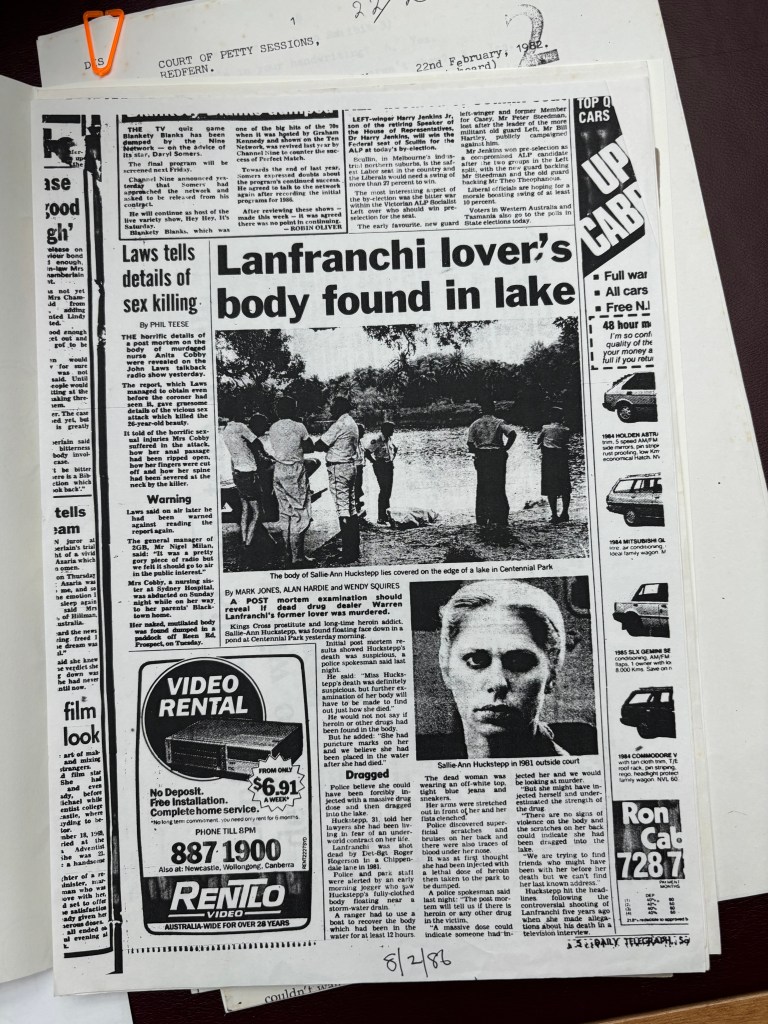
The body of a woman found floating in a pond in Sydney was later identified as 31-year-old Sallie-Anne Huckstepp. An active crime scene was established, and police began working to piece together what could have happened. But her death wasn’t a surprise to a lot of police officers and detectives, or anyone that knew Sallie-Anne.
See, Sallie-Anne Huckstepp had been described as having had a target on her back for years. Ever since her boyfriend Warren Lanfranchi had been murdered by senior detective Roger Rogerson, Sallie-Anne had been intent on exposing the corruption that riddled New South Wales Police Force. Sallie-Anne had done what most were too afraid to do and so began a countdown to how long it was until she would face the consequences.
Night of the Murder
The previous night, 6th of February 1986, Sallie-Anne received a phone call at around 10:55pm from a man by the name of Warren Richards. Warren was a convicted drug dealer and in the months before her death, Sallie-Anne had been using and selling heroin supplied by him. It has been detailed in John Dale’s book that after Sallie-Anne got off the phone call with Richards she said to her flatmate, Gwendoline Beecroft, that she would be back in “5 or 10” minutes and promptly left her Edgecliff apartment.
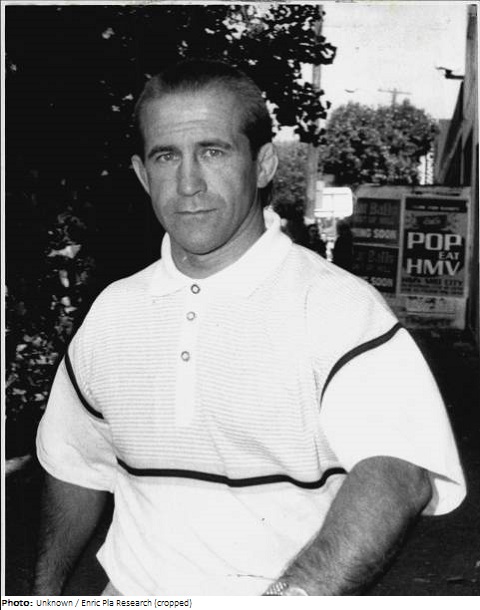
Gwendoline mentioned that at the time of the phone call and before she left Sallie-Anne was flustered and frantic, a stark contrast to her relaxed demeanour before this. In the weeks before her death Sallie-Anne had become increasingly afraid of Warren Richards, but she was selling heroin to pay off money she owed him. Sallie-Anne had made many similar trips like the one she made on the 6th of February to Centennial Park, though sometimes she’d meet Warren at different locations. This was just another normal meeting, or so she thought.
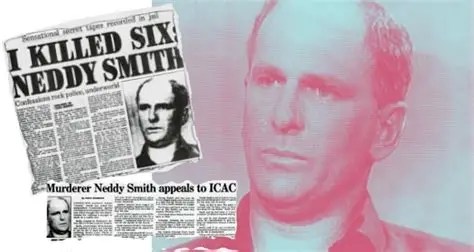
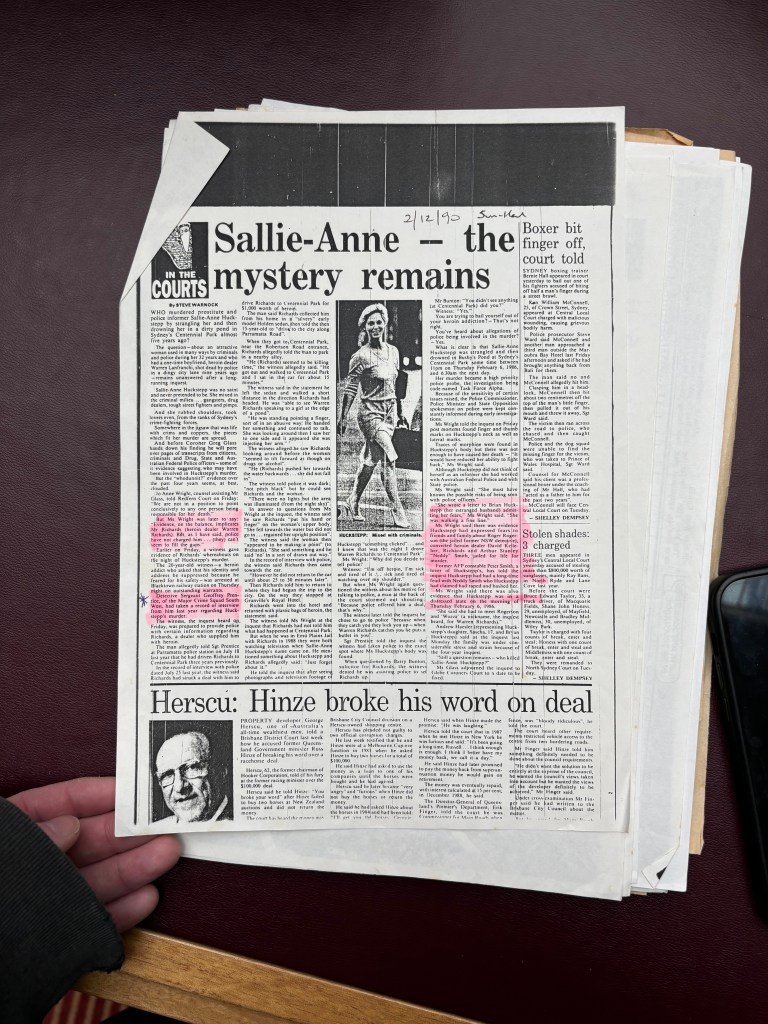
What happened exactly between the time Sallie-Anne left her apartment and when her body was discovered 8 or so hours later is still mostly a mystery today. Despite a jailhouse taped confession from Arthur ‘Neddy’ Smith (who was later acquitted in the trial for her murder), no one has ever been convicted in relation to Sallie-Anne’s murder.
I will be going into each element of Sallie-Anne’s murder in detail in the future, because it is obviously an important part of her story and the fact it remains unsolved is disappointing, but not surprising. However, this isn’t why I’m writing about her. Sallie-Anne’s unsolved murder isn’t the only injustice she has seen; the others are more examples of how our government fails us, fails children, fails the mentally ill and addicted. It shows us how these failures can set us up for a lifetime of suffering when there are no resources or support, or frankly, any sympathy for victims.
Nevertheless, I want to give you an overview of what happened to Sallie-Anne that night and the subsequent events as I know it is a point of interest for most.
The Day of The Discovery
At 10:30am, Detective Sergeant James Waddell arrived and took control of the investigation, commandeering the Tactical Response Group truck. A Tactical Response Group had already been at Centennial Park that morning doing training. The scene was sealed off as other police were ordered to search the banks of the pond and surrounding areas for any items that may belong to Sallie-Anne or relating to the case. Police divers performed searches of the pond but came out with nothing.
Dr Sergio Staraj, a medical officer who would later perform the first autopsy on Sallie-Anne was on scene to pronounce her death.
As written in John Dale’s book, Detective Senior Sergeant Geoffery Prentice from the Homicide Squad arrived and after seeing who was laying lifeless on the embankment he said to another officer “We got a problem here for the next 20 years. It’s Sallie Huckstepp.”
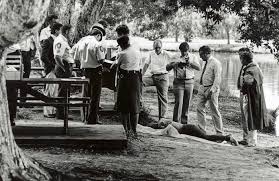
At 12:30pm, Detective Senior Constable Clinton Nicol from the Scientific Investigation Section was briefed and he examined the body. He noted that the deceased female was wearing a pair of Smiths jeans with the top clasp open, a white jumper that was rolled up above her chest and sandshoes. She had a gold ring and gold bracelet on her right hand and a gold ring, a gold chain and gold watch on her left hand.
Detective Nicol examined several injuries including: “abrasions on the cheeks, right side of the chin and lips and several dark marks or lines running across the upper throat region directly below the chin.” He and Dr Staraj noted “vertical scratches to her shoulder blades and to her middle back, the bulk of which has scabbing.”
In addition to this, Constable Nicholls (not to be confused with Detective Nicol), an officer from the Mapping and Photogrammetry Unit arrived around 12:45pm. Constable Nicholls reported, “I was taken to the body of a Caucasian female on the Northern bank of the duck pond. I took photographs of the deceased and saw two 3-5 millimetre circular superficial scratches to the face, one to the lower lip, the other to the right cheek. There were a number of narrow lines running across her upper throat region. There was no mulch or weeds in her mouth, but extensive foam around her lips.”
Constable Nicholls found what appeared to be human hair in the reeds which he bagged and gave to Detective Nicol, along with the film of the photographs he had taken.
A woman, Ms Soares who was visiting her boyfriend Paul Robinson, who worked at Centennial Park as a General Hand came across a New South Wales police badge lying in the soil on the far side of the pond handed the badge to the driver of the TRG truck. She said “I picked it up and the number was eighty-six something. I walked over to some police and handed it to a uniform bloke.”
Later that day, Constable Bradley Conner, a motorcyclist from ‘A’ District realised his badge, numbered 8326, had fallen off his collar while assisting with the search. Of course, as the information became known to media the origins of the badge would become heavily scrutinised by journalists salivating for a scandalous headline.
Crime Scene Evidence
The following items were found at the crime scene:
- Police badge
- Several tyre impressions in the dirt which were dry despite the rain
- A palm print found on the outside of the boot of Sallie-Anne’s car
Items that were found 2 hours before the discovery of Sallie-Anne’s body:
- A black leather wallet containing about 50 cents and a Commonwealth Bank passbook
- Packet of St Moritz cigarettes
- A lighter
- Leather pouch of keys
- A small blue comb
Sallie-Anne’s car – a white 1973 Ford Cortina – was parked on Martin Road near the junction of Lang Road and Robertson Road, outside the gates of Centennial Park. There were handprints found inside the rear window, these were Sallie-Anne’s prints. The palm print found on the outside of the boot of the car remains unidentified.
At 1:45pm that day, Sallie-Anne’s body was taken to the City Morgue. She was later identified by her sister, Debra, and her father, Jack Krivoshow.
It wasn’t initially obvious what caused her death, and many hypothesised a drug overdose, or suicide may be responsible. Just hours after the discovery of her body a New South Wales police officer told reporters there were no obvious signs of violence on her body. These theories seemed almost ridiculous as the many obvious injuries to Sallie-Anne’s body including signs of strangulation indicated otherwise. For now, I am going to leave my opinion out as I want to lay out the facts for how they were reported. When we revisit this in further detail, I can’t say it won’t come up.
Witnesses?
Two witnesses, Theresa Whitehouse and William Whitehouse, came forward days after the murder to say that on the Thursday night 6th February, they were walking their dogs between 10:40pm and 10:45pm. Theresa said “I was in Alison Road near Glensynd Motel when I saw a motorbike travelling down Alison Road from the Randwick direction towards us. It turned right and drove onto the private bus road and then crossed the little pedestrian bridge which leads into Centennial Park. There were two persons on the motorbike, the driver I am unable to describe. The pillion passenger had no helmet on, he had shoulder-length hair, a white sleeveless top and a pair of dark long pants.”
William Whitehouse described the motorbike as “an older style ‘easy rider’. Possibly a Yamaha with ‘low-handled bars.” The bike crossed the footbridge and followed the direction to the right towards the park.
As a reminder, Sallie-Anne received the call from Richards at 10:55pm and left immediately after. From her apartment in Edgecliff, it took approximately 5 minutes to get to Centennial Park.
When her body was discovered, the gold Michel Herbelin watch on her left wrist had stopped at exactly 10:59.
References:
Huckstepp: A Dangerous Life – John Dale
 Her Achilles Heel
Leave a comment