Family Matters
I first learned about my family connection to Sallie-Anne Huckstepp in 2020. For years, my father has sifted through family records to piece together his genealogy. It’s quite fascinating tracing back ancestors and learning about their lives and what, or should I say who, weaves the biological web. Carefully curated genes over hundreds of years, contributed by each parent, grandparent, great grandparent etc that will ultimately spit you out. It’s a strange thought.
Anyway, knowing that I am unhealthily interested in true crime, my dad told me about Sallie-Anne and that she had married into his side of the family. Bryan Huckstepp, my 3rd cousin, met Sallie-Anne when she was 16 years old. He was 24. Two months after her 17th birthday, Bryan sent Sallie-Anne to Kalgoorlie in Western Australia to work in a brothel. According to John Dale’s biographical book on Sallie-Anne’s life, “Bryan Huckstepp had convinced her that for the sake of his freedom and their future happiness a short stint in the famous brothels of Hay Street wouldn’t hurt her.” So, as you can see the image of Bryan being painted here isn’t great. As my dad told me, my grandma called him a “no hoper”, and it seems she was right.
My dad’s family didn’t know much about Bryan. My Grandma has passed now so I can’t ask her what she remembers, besides the no hoper comment. I can imagine since Bryan met Sallie-Anne when she was 16 and not long after sent her to Kalgoorlie to make money for him while he was in jail, he wasn’t really sitting around the dinner table every night with the family.
Bryan didn’t live a long life himself; he died in 1995 by suicide. He was 41 years old. I have been searching relentlessly for a death certificate, but I can’t seem to find one. That information is from files I found of John Dale’s. As well as sending Sallie-Anne to Kalgoorlie and setting a precedent for her future line of work, he also introduced her to heroin.
Back to the Beginning
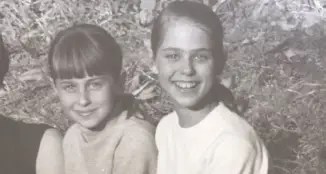
Sallie-Anne Huckstepp was born Sallie-Anne Krivoshow on 12th December 1954. Patricia who also lived in Sydney, met Jack at a social dance in Double Bay in the early 1950’s. Quickly pregnant, and despite an abandoned attempt at terminating her pregnancy, Jack and Patricia moved in with Jack’s parents, newly married with their baby daughter, Sallie-Anne. Not long after, Sallie-Anne’s sister, Debra, was born, being only 20 months younger than Sallie-Anne. By the age of 5, Sallie-Anne’s parents had divorced and her mother, Patricia, had abandoned her daughters.
Sallie-Anne, Debra and Jack lived with Jack’s mother, her uncle Ike and Aunt Rose in an apartment block in North Bondi. Jack, now providing solely for his two young daughters worked nights driving taxi’s. Sallie-Anne was an intelligent young girl, always doing well in her studies. Though, as she got older her priorities changed and dropped out of school at 15 years old.
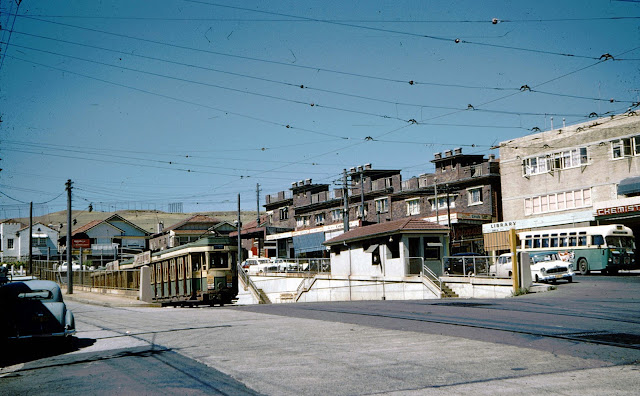
North Bondi 1960
Sallie-Anne’s teenage years were turbulent, having grown up without her mother, her father relied on Sallie-Anne to take on the ‘motherly’ role, forcing her to grow up quickly. Despite carrying the burden of many adult responsibilities beyond what a child should have, when Sallie-Anne became somewhat rebellious in her teenage years, she was often reminded that she was a child and needed to act like one. I can imagine that the contradiction of being thrown into the role of an adult whilst being treated like a child was confusing for Sallie-Anne. Court transcripts make mention on multiple occasions of the tense relationship with her father, both seeming to be unwilling to find some middle ground.
It is true that Sallie-Anne was acting out by running away from home and socialising with older friends around Bondi where she lived at the time. She was experimenting with drugs and not adhering to her father’s rules. She believed she was mature and wanted to be treated like an adult but lacked the life skills to act like one. I think most of us can relate to feeling like this in our teenage years.
It is one of the most challenging times in our development where hormones meet naivety. I was no exception. It was in those years where my mental illness began to surface, and I had very little understanding of what that meant. I was 15 when a good friend passed away, I was already confused about why life felt a lot darker to me than everyone else, so this loss had a compounding effect on my emotional stability. My friends and I were grieving, none of us knew what to do with that grief, so we surrounded ourselves in an environment of alcohol, heavy metal, parties and tears. It was the perfect backdrop for an angsty teen with far more attitude than common sense. Luckily for me my anxiety-ridden brain (which I’m convinced I was born with) had made me afraid of a lot of things, including getting in trouble. So, while I experimented with the standard things teenagers do, my fear made me toe a line between obedience and adolescent curiosity (most of the time). I decided to save my alcoholism for my late 20’s, when I could be a true disappointment to myself.
I had a very different childhood than Sallie-Anne, so I won’t pretend I know what she was dealing with. It seems like her father, Jack, tried to get Sallie-Anne help in a lot of ways, court transcripts note that she was seen by a psychiatrist Dr. Sarah Williams at Ryde Child Health Centre a few times and Jack wanted her to receive help along the same lines as this. There are reports of Sallie-Anne attempting to take her life on more than one occasion, though I cannot verify this with the little information I have.
Regardless of their strained relationship, I can see that Sallie-Anne’s father loved her and wanted the best for her but felt powerless and unsure on how to help. It was a time in society where mental illness was still heavily stigmatised, and treatment was largely focussed on institutionalisation. By the 70’s there were a lot of changes being made in psychiatry, though, it’s a slow progression even to this day. But for Sallie-Anne, the trajectory of her life showed us that she didn’t receive the help she needed from a young age. Rather, she was vilified, shamed and sexualised by adult men in positions of power who saw punishment as the best means for a child to turn her life around for offenses she likely did not understand the gravity of.
Jack, wanting his daughters to have a female presence in their lives, went on to remarry in 1965. Their stepmother, Estelle, was allegedly abusive to Sallie-Anne and viewed her as a threat due to her strong personality. Sallie-Anne was 10 years old at this stage.
In John’s Dale’s book Huckstepp: A Dangerous Life, her sister, Debra Krivoshow, describes how Estelle was very cruel to Sallie-Anne.
“She wasn’t allowed out of her bedroom until 7am and if she wanted to go to the toilet she’d have to wee out the window. Once Sallie wet her panties and Estelle made her wear them around her neck. Dad turned his eye to a lot of that. Another time Sallie ate some cherries out of a tin and Estelle punished her by making her eat a cold chop with Ajax on it.”
Sallie-Anne was isolated from the rest of the family by her stepmother locking her in her room, sitting inside a circle marked in chalk while they went on outings without her. Her hair was cut and Sallie-Anne claimed she was often struck in the face.
The marriage was short lived, having divorced in 1967, just 2 years later.
Girl, Interrupted
On 27th of August 1969, at age 14, Sallie-Anne was apprehended for “Smoke Indian Hemp” by Detective Sergeant Phillips and Detective Senior Constable Bannister of the Drug Squad. Court transcripts outline the night of the offense and who Sallie-Anne was with, however, I can’t find in any court files or transcripts to indicate in what circumstances Sallie-Anne was caught. From what information I have I believe this was her first offense.
Dr Campbell, a psychiatrist who worked at Brisbane Street Child Guidance Clinic saw Sallie-Anne for an assessment on the 29th of August after she was apprehended for this offense. In his report he made mention of Sallie-Anne being kept in an adult role by her father since the stepmother left.
Dr Campbell goes on to say “Mr. Krivoshow is seen by Sally [sic] as very strict; particularly in her social relationships. Sally [sic], justifies her promiscuous behaviour by her adult role in the home.” He then states that the clinic cannot offer any worthwhile help to them and recommends probation for Sallie-Anne. She was ultimately given 12 months’ probation with conditions including but not limited to good behaviour.
Sallie-Anne breached her probation conditions and was apprehended and detained at Minda Remand Centre in June of 1970 for two weeks.

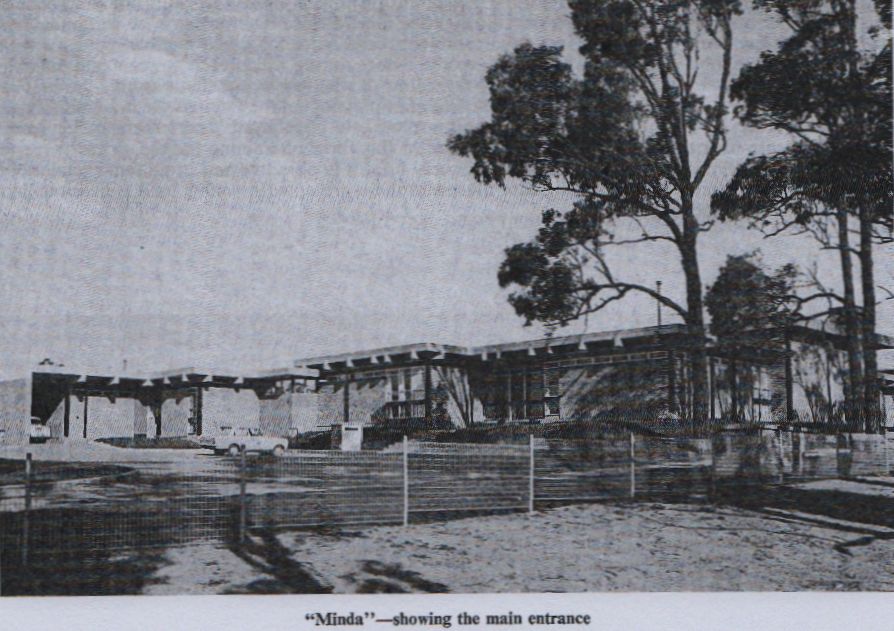
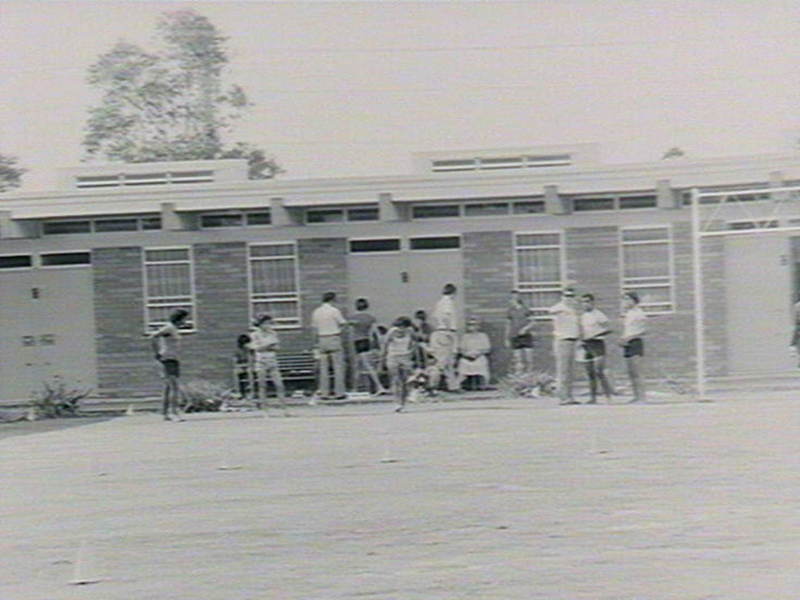
Minda Remand Centre
Before Sallie-Anne was remanded to Minda she was involved in another court case. Carnal Knowledge is an archaic term used to describe sexual intercourse with someone under the age of consent, or statutory rape. Reading through court transcripts though, you would think Sallie-Anne was the person on trial. But the fact is that Sallie-Anne was a 14-year-old child and the man involved was 18 years old. There’s so much wrong with what occurred in the trial and how Sallie-Anne was treated as a victim.
In the next few articles, I’ll be going through this court case from the information I have available as well as the conditions of Minda Remand Centre that children had to endure. There’s a lot to unpack here, and it looks as though what happened in Sallie-Anne’s adolescence almost foreshadows her future in a really eery and sad way. The saddest part being that if the right interventions were made and if the government had proper systems in place to help young girls and boys dealing with issues like these, then it didn’t need to happen at all. But what kind of hope does a child have when instead of receiving understanding, patience and empathy with the right resources to make the changes they need to ensure they are on a positive path, they are punished and told that they are bad.
I’m not in a position to comment on how to parent children, I don’t have them. This is a sensitive subject I would prefer to bypass at this point because I can, and will, go off on a tangent that will probably make me look like a self-righteous arse and I think we can all come to that conclusion in our own time.
But I digress, children are products of their own environment and for someone like Sallie-Anne who never really had any stability, had a strained relationship with her father and a mother who abandoned her I can see how the attention from older, “mature” men could in the eyes of a teenager, equate to stability and safety. Older men like Bryan Huckstepp.
References:
John Dale – Huckstepp: A Dangerous Life
Image of North Bondi – North Bondi 1960
Image of young Sallie-Anne – Sallie-Anne Huckstepp ‘knew her time was limited’ after speaking out about Roger Rogerson
 Her Achilles Heel
Leave a comment